
Product Web app Shipped 2026
order-inventory-management-system
A full-stack order and inventory management system for managing products, stock, and customer orders with secure server-side business logic.
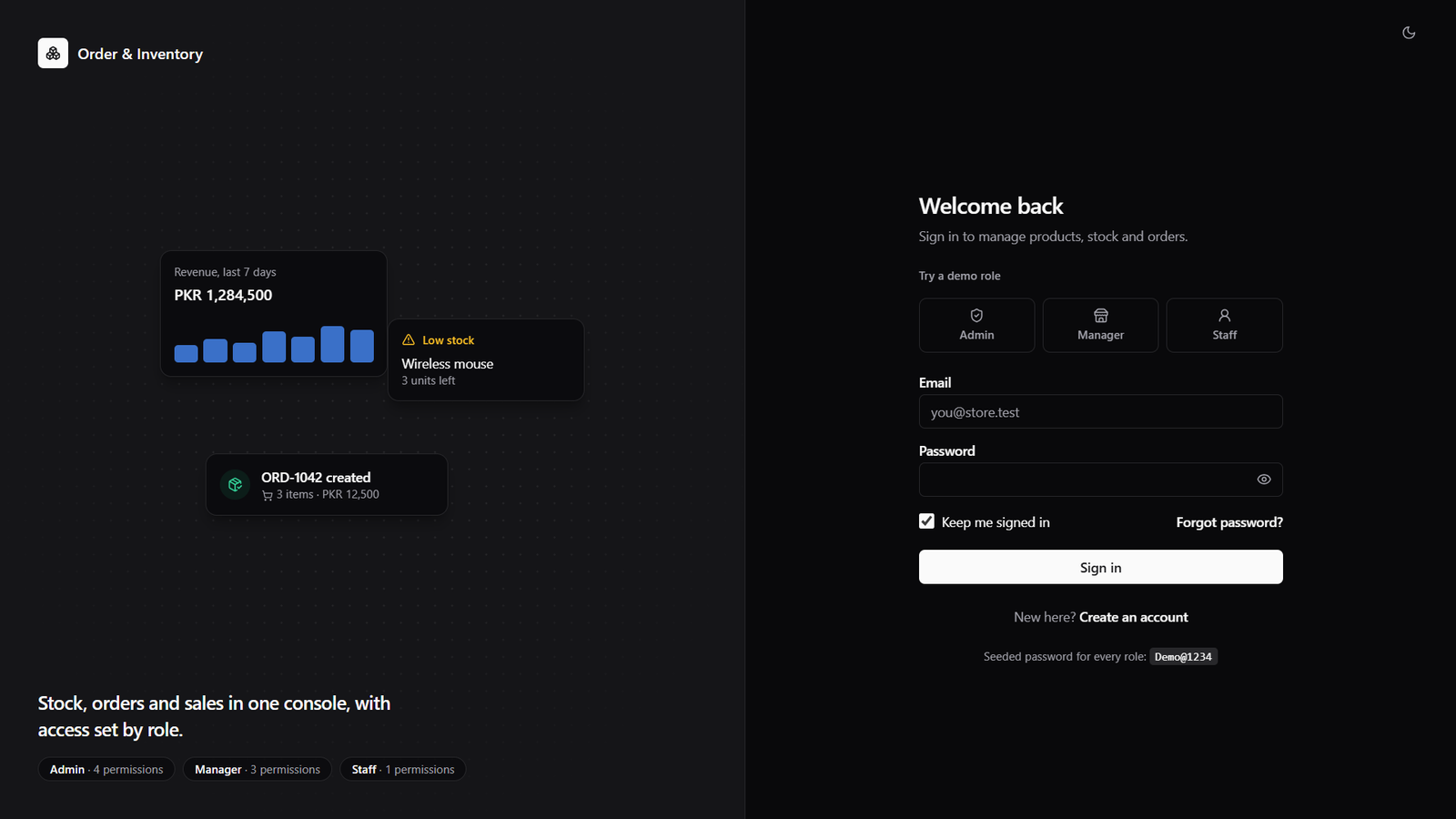
Order & Inventory Management System
1. Project Overview
The Order & Inventory Management System is a software project designed to organize inventory records and order-related workflows within a centralized application. The primary goal is to make it easier to manage products, monitor stock information, and maintain structured records of orders throughout the business workflow.
Inventory and order management are closely connected business functions. Product availability influences order fulfillment, while incoming and outgoing orders affect inventory levels. Managing these processes together can help businesses maintain more consistent records and reduce the complexity of handling operations across disconnected tools.
This project explores how software engineering can be applied to these everyday business challenges by bringing order-related and inventory-related information into one system.
2. The Problem
Businesses that handle products and customer orders need a reliable way to organize their operational data. When product information, stock records, and order details are maintained separately, it can become difficult to keep information consistent.
Some common challenges include:
- Maintaining accurate product and inventory records.
- Organizing order information in a consistent format.
- Tracking changes to stock quantities.
- Finding product and order information efficiently.
- Reducing repetitive administrative work.
- Keeping inventory information aligned with order activity.
These challenges provided the context for building a system focused on structured inventory management and organized order workflows.
3. The Solution
The project brings order and inventory management into a single software solution. Instead of treating stock information and order records as unrelated activities, the system is intended to provide a more organized way to manage both areas.
The application centers on maintaining product information and supporting order-related operations. Its overall purpose is to simplify the handling of business data and establish a structured foundation for managing products and orders.
The system also provides an opportunity to apply software development principles to a practical business use case, including data organization, application structure, and the implementation of interconnected functionality.
4. Core Functional Areas
Inventory Management
Inventory management focuses on maintaining organized records of products and their associated stock information. A structured inventory module helps users work with product data more consistently.
Depending on the implemented functionality, this area may include product creation, editing, searching, and stock updates.
Order Management
Order management focuses on organizing order records and the information associated with each order. Keeping order information structured helps users retrieve records and manage the order workflow more effectively.
The exact order lifecycle, including any status transitions or fulfillment functionality, should be documented according to the actual implementation.
Product Information
Product information forms the connection between inventory records and order details. A consistent product structure helps avoid unnecessary duplication and makes product information easier to maintain.
Data Organization
A key consideration in an order and inventory application is how different types of information relate to one another. Product records, inventory information, and order details need a clear structure so the application can manage them consistently.
5. Technical Implementation
The project provides an opportunity to demonstrate practical application development, from organizing business data to implementing the functionality required by the system.
A detailed technical breakdown should cover the actual technologies and design decisions used in the repository, including:
- Frontend: The framework, components, and interface patterns used to present application functionality.
- Backend: The server-side logic responsible for processing operations, where applicable.
- Database: The storage model used for products, inventory records, and orders.
- Application architecture: The organization of the codebase and the separation of different responsibilities.
- Validation and error handling: The mechanisms used to protect data integrity and handle invalid operations, where implemented.
These details should be filled in from the project's source code rather than assumed from its name.
6. Engineering Considerations
Order and inventory applications involve related data that must remain consistent as business operations change.
For example, if an order affects stock quantities, the application must handle that relationship carefully. Similarly, product information referenced by an order should remain understandable even when other product details change.
Important engineering considerations for this type of system include:
- Maintaining consistent product and order records.
- Validating user input before processing changes.
- Handling stock updates reliably, if stock is modified by orders.
- Organizing application logic so individual features are easier to maintain.
- Providing useful feedback when an operation cannot be completed.
The specific approaches used in this project should be described based on the code that has actually been implemented.
7. Development Challenges
One of the central challenges in this type of software is connecting related business operations without making the application unnecessarily complicated.
Inventory management and order management have different responsibilities, but they also depend on shared information. Designing the application requires consideration of how these responsibilities interact and how changes should be reflected across the system.
Another important consideration is maintainability. As a project grows, a clear organization of code and data becomes increasingly valuable for adding functionality and correcting issues.
These considerations make order and inventory management a useful practical exercise in building software around interconnected business requirements.
8. Potential Business Value
A well-implemented order and inventory management solution can help a business organize its operational records and reduce the effort required to manage product and order information.
The intended value of this type of system includes:
- More organized inventory records.
- Easier access to order information.
- Improved consistency between related business data.
- A centralized approach to routine product and order operations.
- A foundation for future reporting and workflow improvements.
These are potential benefits rather than measured outcomes. Any claims about time saved, error reduction, or improved business performance should be supported by actual usage or verified results.
9. Key Learnings
Working on an order and inventory management project provides practical experience in translating business workflows into software functionality.
Important learning areas include understanding relationships between business entities, organizing application data, considering consistency across related operations, and structuring code for maintainability.
The project also illustrates why software should be designed around the needs of its intended users. A useful business application must do more than store information; it should help users manage their work in a clear and reliable way.
10. Project Outcome
The Order & Inventory Management System represents an application of software engineering to a common business challenge: managing products, stock information, and orders in an organized environment.
By focusing on the relationship between inventory and order workflows, the project provides a foundation for demonstrating application development, data management, and practical problem-solving.
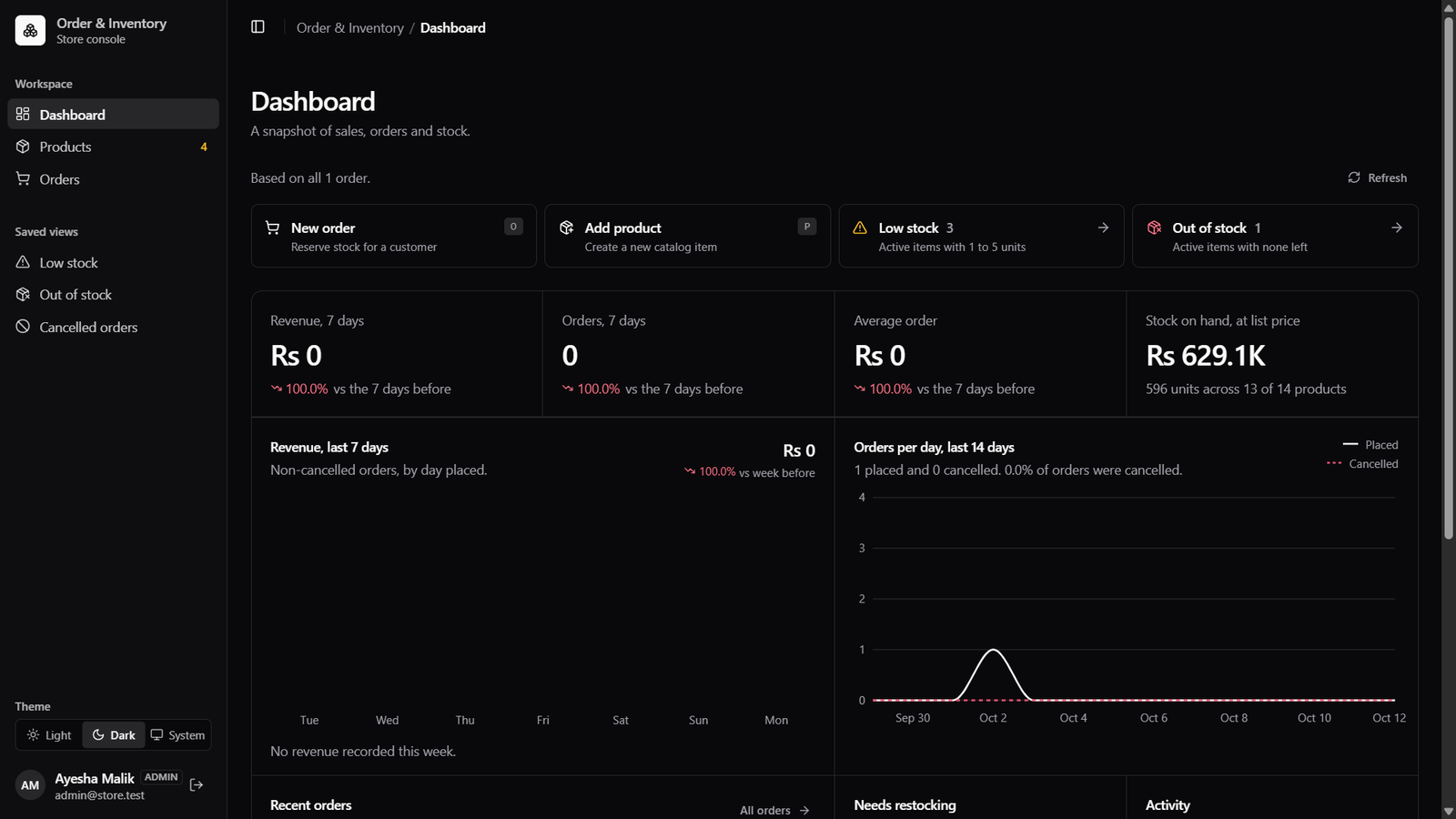
The final portfolio presentation should include screenshots of the implemented functionality, the technologies used, and a clear description of the features developed.
Next project
tornado-fries-mobile-app ›