
Contribution Web app Shipped 2026
Cola Next — Distributor Management System
A custom-built Distributor Management System developed for a Cola Next distributor to streamline daily distribution operations, sales management, inventory tracking, and business workflows. The system helps digitize operational processes, improve record management, and provide a more organized way to manage distribution activities.
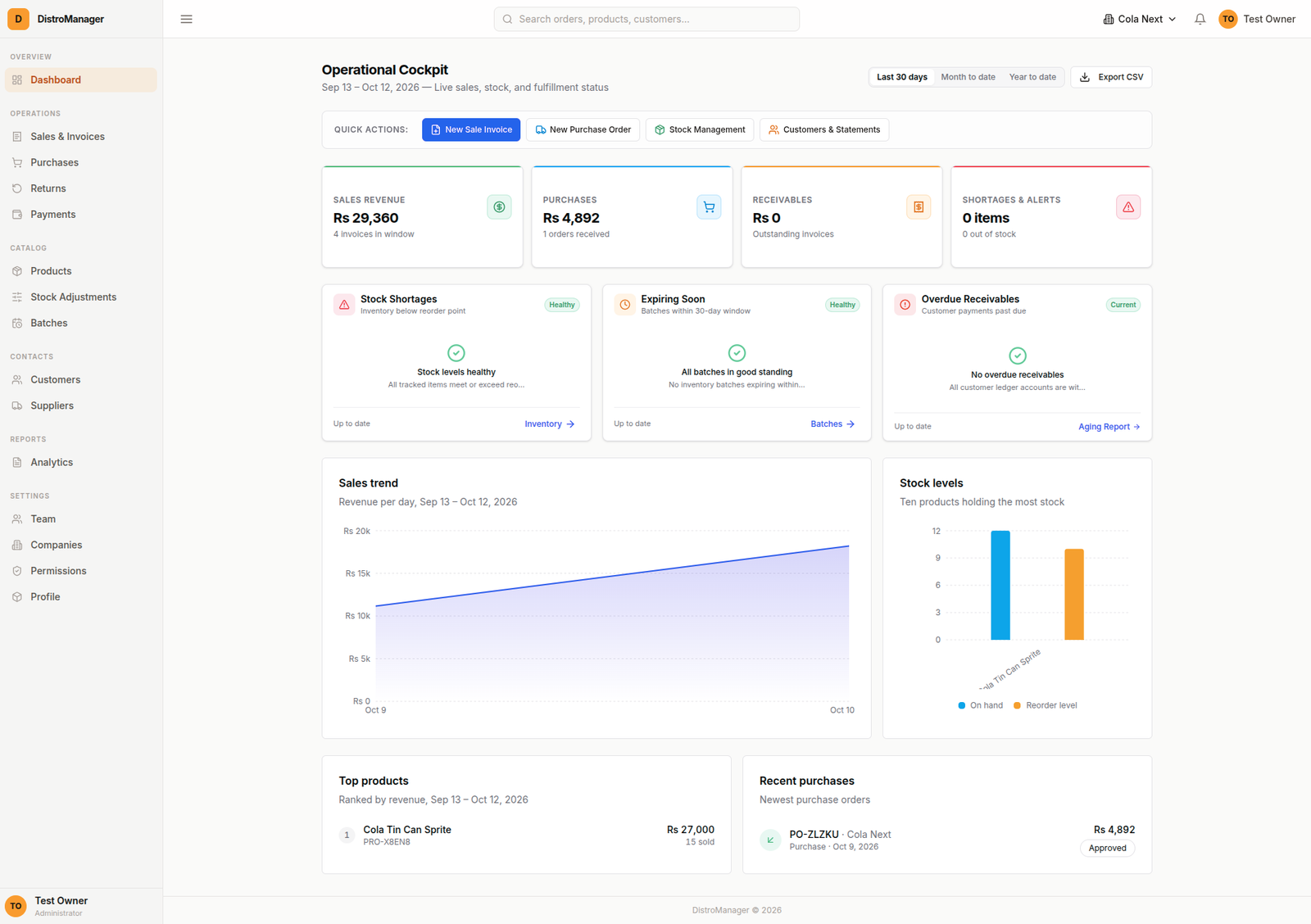
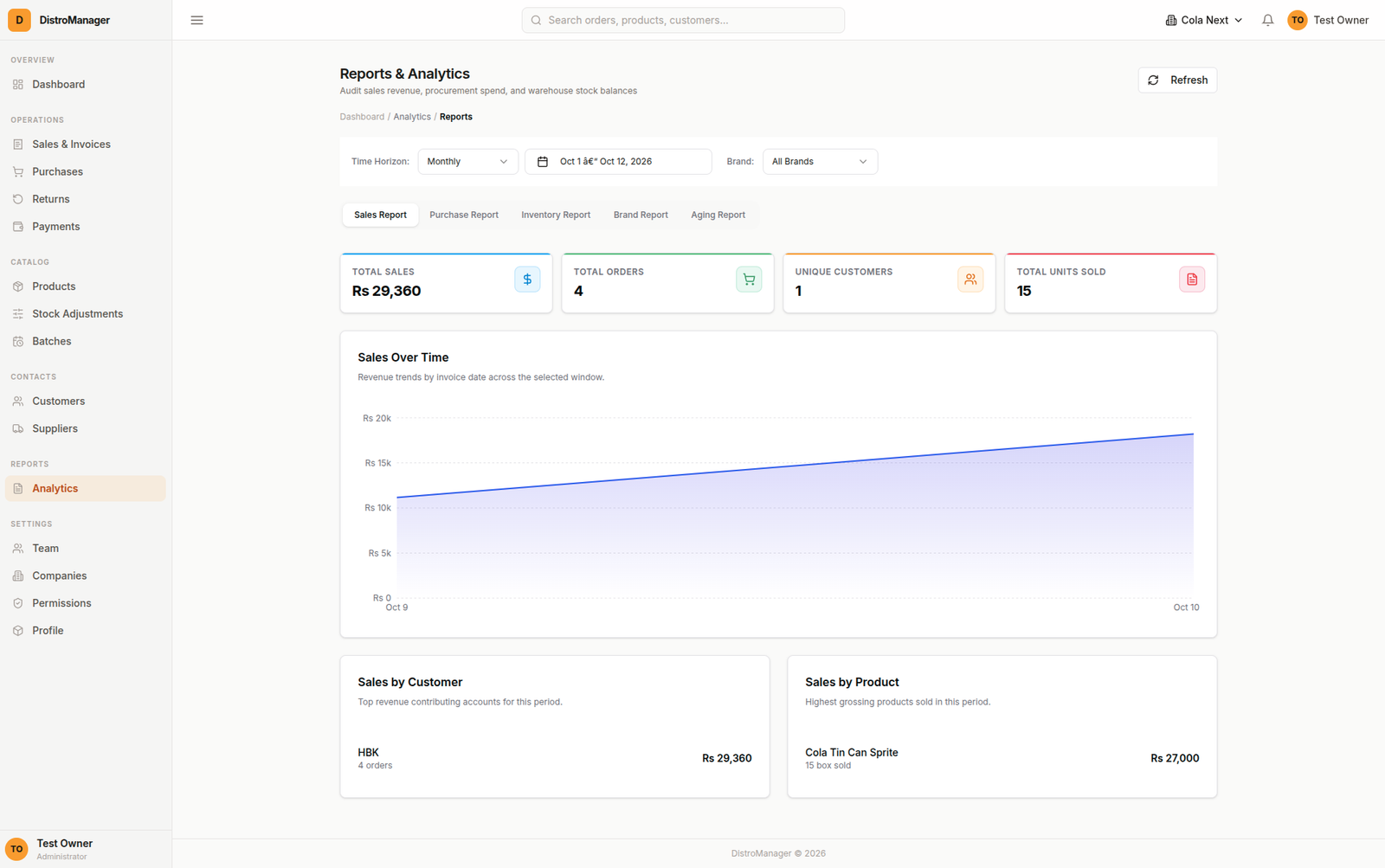
Cola Next Distributor Management System
Project Overview
The Cola Next Distributor Management System is a custom software solution developed for a Cola Next distributor to improve the management of day-to-day distribution operations. This paid client project focuses on digitizing business workflows and providing a centralized platform for managing important operational activities.
The system is designed around the needs of a beverage distribution business, where efficient coordination of sales, inventory, customer information, staff, and business records is essential. By bringing these activities into a structured digital environment, the project aims to make business operations more organized, accessible, and manageable.
Unlike a generic management application, the system is being developed to address the practical requirements of an active distribution business, with an emphasis on usability, operational efficiency, and the needs of the people who use it.
The Business Challenge
Beverage distribution involves several interconnected activities, from maintaining stock records and processing sales to managing customer relationships and coordinating staff operations. When these activities depend heavily on manual processes or disconnected systems, keeping business information consistent and up to date can become challenging.
Common operational challenges in distribution businesses include:
- Maintaining organized and accurate inventory records.
- Managing sales transactions and associated business information.
- Keeping customer records accessible and up to date.
- Coordinating staff responsibilities and daily activities.
- Reducing repetitive administrative work.
- Making important business information easier to manage.
The objective of this project was to develop a centralized software solution that could support these operational needs and help the distributor move toward a more structured, technology-driven way of working.
The Solution
We worked on developing a dedicated Distributor Management System tailored to the client's business requirements. The system brings distribution-related workflows into a unified software environment, creating a foundation for more consistent record management and improved coordination between business activities.
The project covers key areas associated with distribution management, including sales, inventory, customer information, and staff management. These areas form an important part of the operational workflow of a beverage distributor.
The overall approach is to build software around the client's actual business processes rather than forcing the business to adapt to an unsuitable generic solution.
Core Functional Areas
1. Distribution Operations
The system is designed to support the operational activities involved in running a beverage distribution business. A centralized approach helps organize essential business information and provides a structured environment for routine workflows.
2. Sales Management
Sales are a fundamental part of distribution operations. The project includes a sales-management focus intended to help organize sales-related information and support the distributor's daily commercial activities.
3. Inventory Management
Inventory is an important component of beverage distribution, where stock records need to be managed alongside sales and other operational activities. The system incorporates inventory management as part of the broader distribution workflow.
4. Customer Management
Maintaining organized customer information is important for distributors who work with multiple customers and business accounts. The project includes customer management as one of its key functional areas.
5. Staff Management
Distribution businesses depend on people coordinating different responsibilities. The system's staff-management focus supports the broader objective of organizing business operations through a centralized platform.
These descriptions reflect the project's functional areas; specific workflows and features should be documented according to the implemented code.
My Role and Technical Contributions
My involvement in this project provided practical experience contributing to a real-world software solution developed for a paying client.
Rather than working exclusively on an academic exercise or a personal prototype, this project required us to consider practical business requirements and the expectations associated with delivering software for an actual organization.
My contribution is best represented through the modules, features, code changes, and technical decisions I personally worked on within the repository.
This includes documenting the relevant implementation work, explaining the reasoning behind technical decisions, and connecting individual development tasks to the broader goals of the distribution system.
The project also highlights the importance of collaboration, maintainability, and understanding the relationship between software functionality and business operations.
Engineering Approach
Developing business management software requires more than implementing individual features. Different functional areas must work together coherently, and the underlying codebase needs to remain understandable as the project evolves.
Throughout development, the broader engineering objectives include:
- Organizing functionality into maintainable components and modules.
- Keeping business workflows aligned with client requirements.
- Supporting consistent handling of business information.
- Improving the structure and maintainability of the codebase.
- Building a foundation that can accommodate future requirements.
The repository's actual implementation and my commit history should be used to identify the specific architectural decisions, technologies, and engineering improvements attributable to my work.
Working on a Real Client Project
One of the most valuable aspects of this project is its commercial context. Building software for a paying client introduces practical considerations that extend beyond writing code.
The development process requires an understanding of business needs, communication about requirements, consideration of real operational workflows, and attention to the usability of the resulting solution.
Working on the Cola Next Distributor Management System helped connect software engineering concepts with the challenges of developing a solution for an actual business environment.
It also reinforced the importance of building software that addresses a real need rather than focusing only on technical complexity.
Business Value
The system is intended to help the distributor organize essential operational information and manage distribution-related workflows through a centralized platform.
By digitizing relevant business processes, the project aims to support:
- More structured management of business records.
- Easier access to essential operational information.
- Better organization of sales and inventory activities.
- More consistent handling of customer and staff information.
- A foundation for further process improvements as the business evolves.
These are the intended benefits of the system; measurable improvements should be added once they have been verified through actual client usage.
Key Learnings
This project provided an opportunity to apply software development skills in a commercial setting and better understand how technology supports operational businesses.
Key learning areas include:
- Translating practical business requirements into software functionality.
- Understanding the interconnected nature of distribution workflows.
- Collaborating on a shared codebase.
- Considering maintainability and future development alongside immediate requirements.
- Recognizing the importance of aligning technical implementation with client expectations.
Project Outcome
The Cola Next Distributor Management System represents an important step in applying software engineering to real business challenges. As a paid client project, it demonstrates experience working on a solution intended to support an active beverage distribution operation.
The project brings together business-focused software development, distribution workflows, and practical engineering considerations in a single application.
Final Reflection
For me, this project represents the practical side of software engineering: understanding a business problem, collaborating on a solution, and contributing to software designed for real operational use.
It demonstrates the importance of building technology that serves a clear purpose and creates value in the environment where it will be used.
The experience gained through this project contributes to my growth as a developer, particularly in building business-oriented applications and working on software with real client requirements.
Next project
Global Shapers Peshawar Hub — Community Impact Platform ›